

Sandaconda and Silicobra finally made their Pokémon GO debut during the Sustainability Week 2026 event, and on first glance, they come across as just a couple of weird desert snakes. Well, they are that and MORE! I mean, why on earth does it drop in an event revolving around the sustainability of the ecosystem?
We’ll get to all that and cover various aspects of this sandy serpent, and rest assured, you’d be surprised at what its origins cover!
Silicobra

We start with the pre-evolution of Sandaconda, Silicobra.

You might think the name refers to a silly cobra, but no… the ‘sili’ is from Silicon, a common element in sand. See, a direct ode to its desert cobra origins!
Instead of just having a cobra’s typical hood, it has a sandbag instead.

Sandaconda
Once again, the name makes it obvious. Sandaconda is a sand anaconda.
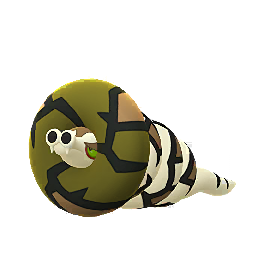
But this anaconda shoots sand out of its nostrils, like a shotgun. In particular, it’s the double-barreled shotgun.

The double-barreled shotgun was invented by Joseph Manton, an Englishman, in the 1830s. Sandaconda is a Galarian Pokémon, so it’s no surprise about seeing the British angle.
If that wasn’t cool enough, you should know that the British also invented the sandbags!
So even though cobras and anacondas aren’t British by any means, the gimmicks added to them surely are!
Now, these two Pokémon eat sand, but they don’t ingest it. Rather, they store it in their sandbags (the first coil wound around Sandaconda is its sandbag) to use as an attack: like a shotgun from Sandaconda and via spitting from Silicobra (like a spitting cobra).
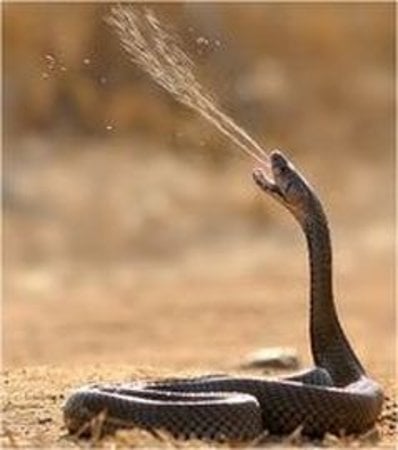
While this venom on your skin is generally harmless (except little irritation if left unwashed), if it gets in your eyes, you can get permanently blinded.
Coming to anacondas, the green anaconda is the one people most associate with this large species. At this juncture, you should note that anaconda is the world’s heaviest snake, not the largest. The credit for the latter goes to the reticulated python.
Sandaconda may be inspired by an anaconda, but it looks more like a desert python. And its stance is similar to that of a ball launcher with a spring.
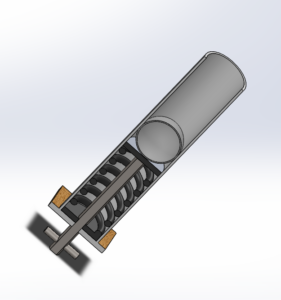
The Pokédex also mentions:
“Its unique style of coiling allows it to blast sand out of its sand sac more efficiently.”
The coiling not just comes from how various snakes like to sleep, but also their act of constriction, which they use to suffocate their prey to death and then swallow them whole.
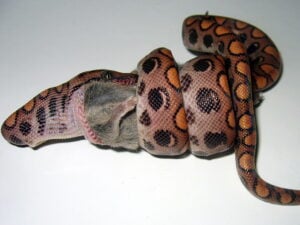
Recent studies have shown that constriction not only breaks bones but also halts the flow of oxygenated blood throughout the body. The heart pumping goes faulty, and it is unable to handle the pressure, making the prey die of cardiac arrest way before it suffocates!
Till now, we have dealt with some obvious inspirations behind these two Pokémon… factors that are quite tangible. We will dive into some deeper, darker, and disturbing details about them, so brace yourselves, this might get a little sad. This section will lean towards the sustainability aspect of Sandaconda.
Sandaconda doesn’t move like a snake usually does. It doesn’t crawl… it basically drags itself forward. This is because it is literally stuck, wrapped around itself rather uncomfortably.
But snakes in nature don’t tie themselves up. That’s because they have nerves and instincts, with their brains tuned to prevent such a mishap from happening. Hold this thought for a second.
Now, we all know how there are various controversial dog breeds, such as pugs. These are species that have been subject to various illegal breeding exercises, making them genetically worse over time. Yes, they have been bred to accentuate certain features like their nose, giving them breathing problems over the course of time.
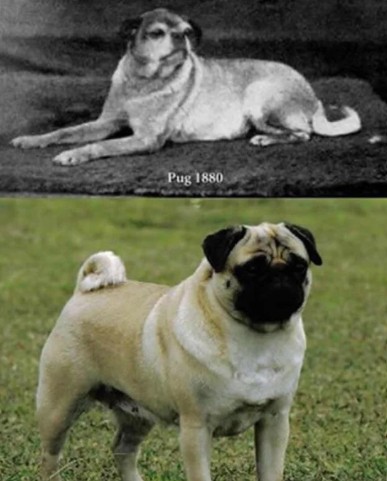
These have happened with many species of dogs, and all of them seem to have some serious health issues, all brought about by breeders.
And why does all this happen? You’ll be shocked, but it’s because people find them cute. Yes, you read that right.
To give you context, a pet bumping into a wall or slipping with stubby legs is found ‘cute’ by many people, but in reality, it’s just the animal suffering!
Sometimes ears and tails get clipped by breeders, paving the way to bad genetics and harm for all incoming generations of the animal in question. Sadly, their lifespans shrink too, and tragically, this short lifespan is exactly how they are marketed. These animals are actually dying of genetic disorders, all of which have been forced onto them from birth courtesy of inbreeding in their previous generations.
Keep in mind that these aren’t genetic mistakes, but practices done on purpose.
And to bring you back to the topic at hand, it happens with pet snakes too, wherein these practices mess with their organs and skeletal structure. In fact, some of these ‘fancy’ snakes sell for huge money in the black market.
To get more specific about snakes, we will look at the spider ball python, a relatively new species of snake that is extremely easy to breed. With such an aesthetic pattern on them, they sell like hot cakes as well.
They are often used in breeding to create complex combinations. That said, the gene is associated with a disastrous neurological disorder known as “wobble,” causing balance issues, corkscrewing, and head tilting.
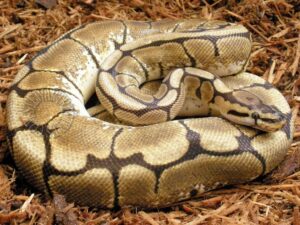
Yes, they all have terrible brain damage, and yet they are still bred because they are in huge demand. And this “wobble” actually makes them popular since people believe that it gives them a distinct personality.
These pythons can barely move right, finding it difficult to tell what’s up, down, or sidewards. They fall often and hurt themselves, pretty badly at times. In fact, they also tie themselves up and wound up into a weird position.
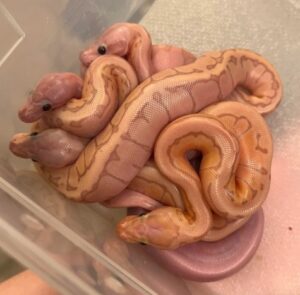
In case you are wondering, people tend to call these movement issues fun personality quirks. 🙁
It’s like breeding a puppy blind on purpose because somebody finds it cute how they run into walls or objects all the time. The same concept applies to these snakes.
And that’s why Sandaconda is like this.
This was perhaps one of the most difficult lore and origin articles to write for me. These snakes deserve to live fulfilling lives, and all the inbreeding done on these poor animals must be strictly banned. Many exotic pet organizations are already doing it, thankfully!
If you want to read the lore, design, and even scientific inspirations of some popular Pokémon, then be sure to give these a read:
Dragapult | Kommo-o | Darkrai | Cresselia | Applin | Mega Salamence | Dialga & Palkia Origin | Giratina | Rillaboom, Cinderace & Inteleon | Garchomp | Baxcalibur | Hydreigon | Skeledirge | Annihilape | Zygarde | Tinkaton | Gardevoir | Druddigon | Hisuian Zoroark | Naganadel | Drampa | Enamorus | Wooloo & Dubwool | Hatterene | Morpeko | Aegislash | Hydrapple | Grimmsnarl | Orbeetle
Happy reading, trainers!