
Hey Trainers!
Now that Pokémon TCG Pocket has been out for a few weeks, I’m sure many of us are starting to get familiar with the way the game works. If you’re anything like me, you’ve started to build up a pretty decent collection of Pokémon cards. You’ve also tried your hand at some battles, starting against the AI and slowly moving up to PVP. And if you’ve played even a light amount of PVP, you’ve more than likely had your entire deck wiped away by the ever-present Mewtwo and Pikachu decks.
For those that may be less familiar with the game, in the current state of the game we only have access to a singular set of cards, known as Genetic Apex. Genetic Apex includes 286 different cards for you to collect. Within Genetic Apex there are three separate sets of packs we can pull from: the Pikachu pack, the Charizard pack, and the Mewtwo pack. There are some cards that are exclusive to each set of packs, with the most obvious being the Pokémon featured from the deck, so Trainers looking to build a powerful deck tend to focus on one set of packs until they get the cards they need. Just as with any game with any sort of competitive format, a meta naturally forms surrounding the strongest cards available.

Within Genetic Apex there are two decks that have risen to the top of the food chain: the decks built around Pikachu EX and Mewtwo EX. With decks built around Lighting and Psychic energy, respectively, these Pokémon are nearly unstoppable if they’re allowed to position themselves correctly. Both Pikachu EX and Mewtwo EX are very easy to get set up to sweep, and there are certain cards that excel at making this setup even easier, making these decks very easy to use. Combine this with the fact that Pikachu and Mewtwo are both featured in two out of the three different Genetic Apex packs and in general are some of the most popular Pokémon around, and its easy to see why they are the center pieces of some of the most popular decks right now.


However, this is not to say that different decks cannot have success. I’ve been playing since launch day and I still don’t even own a single Mewtwo EX or Pikachu EX card, yet I’ve had no trouble being able to compete. I was able to complete all 45 required PVP battles as well as all of the event missions for the Genetic Apex Emblem Event despite not using either of the two most popular decks. Today I’ll be going over some tips and tricks I’ve learned about the game to both succeed using other decks as well as being able to semi-effectively counter the Pikachu and Mewtwo decks when I come across them. Hopefully this article will provide you with a bit more information to be better equipped to handle the TCG Pocket PVP scene.
As an additional disclaimer, I should make it clear that I am by no means an expert at TCG. In fact, I’m very far from it. I am an avid Pokémon GO and VGC player, but I was never into TCG before now. However, thanks to TCG Pocket making the format more casual and accessible, more and more Trainers have been picking up the game.
With that being said, I have no idea if anything I’m saying is “correct”. I am simply going to explain the way I understand the game and what has worked with me. Hopefully this will make this article more accessible for more people, as I am just as new to this as a lot of you all probably are. I will do my best, so I ask that those who are more knowledgeable to stick with me as we work through this article.
As usual, I have rambled on longer than is probably reasonable. With that being said, I encourage you to use the table of contents to jump around through the article, especially if you are looking for inspirations for new decks. However, I appreciate anyone who sticks with me through the rambling. Hopefully you learn something from it.
With all of that out of the way, let’s dive in!
To start things off, we first need to talk about some general mechanics for TCG Pocket, as they relate to a lot of the tips I will be covering in this article. In my mind, I categorize the cards in my deck in a few different ways, separately than the typical classifications such as Basic Pokémon, Trainer Card, etc. Again, this is by no means an official way of classifying cards, it just works for me.
Core Pokémon
For the most part, decks are built around one extremely powerful Pokémon and their evolutionary line (if applicable). In many cases, these are EX Pokémon cards, which are extremely powerful but award two points for being knocked out rather than one. However, there are plenty of powerful decks built around non-EX cards, such as Dragonite and Weezing. Regardless, the Pokémon that you pick will dictate the entire rest of the deck.
This is where you have the most flexibility. Pick a Pokémon that you like for your core, and the rest of the deck will form around them!
Backup Sweepers
Within the TCG format there is still a decent amount of luck that you need in order to win. While the best decks try and mitigate the amount of luck needed, you will inevitably play a match where you just can’t get your core Pokémon on the field soon enough for it to do its job.
Backup sweepers are Pokémon that are decently strong that can perform well if you find yourself unable to use your main strategy. These Pokémon are usually easier to get set up than your core strategy and can win matches on their own in certain situations. While there are decks that can be built to succeed without backup sweepers, they are particularly useful on “spice” decks. More niche core Pokémon may be more difficult to set up, meaning having other Pokémon to fall back on is definitely a good idea.
Damage Sponges
I don’t love the name of this section, but we’ll run with it for now.
Many strategies in TCG Pocket, especially the less meta picks, require a good amount of set-up and positioning to do well. Especially for core Pokémon that require evolutions, it can be risky to send out your main damage dealer right off the bat, as they could get knocked out before they get set up.
Enter the damage sponges. These are Pokémon that you can easily send out to soak up a few hits while you get your core Pokémon ready for battle. These cards need to have a decent amount of health and attacks that are cheap to use to dish out a bit of chip damage without taking energy away from your core Pokémon. Usually these are Pokémon that won’t do too well later in the match. I usually am ok with these Pokémon getting knocked out early in the match, so that I can safely bring in my core Pokémon once it is set up.
These Pokémon are usually single-stage Pokémon, meaning they don’t need to evolve in order to function. The best ones have upwards of 70 HP, meaning they can take 2-3 hits from early game Pokémon, and can attack using one or two energy. Many of the colorless Pokémon are great fits for this section, but many of the respective types have decent options as well.
Finally, an EX card should NEVER be used as a damage sponge (with one exception). One of my criteria for this section is a card I’m ok with getting knocked out. This doesn’t work as well when my opponent gets 2/3 of the points needed to win the match just taking out my sacrificial lamb. EX cards can definitely take hits better than a lot of single-stage Pokémon, but the cost is too steep in most situations.
Supporters (optional)
Our final category is support Pokémon. There are of course support and item cards that can be used to bolster your team, but certain Pokémon can also play this role. Whether they have passive abilities that can support your team or can set your core Pokémon up for success, these Pokémon can massively boost the viability of your team. Not every Pokémon needs to be taking KO’s to add value to your team.
Supporters are definitely not required on every deck. However, there are certain decks that have support Pokémon that are essential to their primary strategy. It will take some familiarity to the game (and oftentimes losing to an OP strategy) to learn which decks will benefit from supporters, but in time you will definitely see how valuable they can be!
Now that we’ve gone over the way I think about the cards in my deck, we can move on to the next step. In order to understand how to beat the meta decks, we first need to understand how they work. Again, both of these decks are extremely dominant, but understanding how they work will definitely give you a fighting chance. With that being said, let’s take a look!
How the Mewtwo EX Deck Works
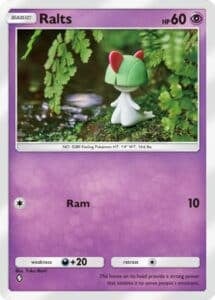
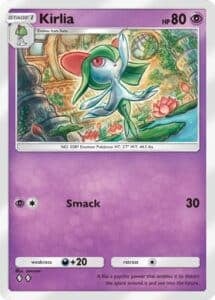
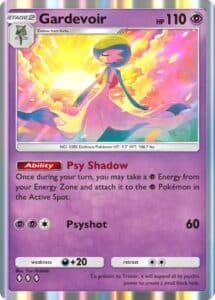






First up is our Mewtwo EX deck, utilizing Psychic energy. As expected, the deck revolves around setting Mewtwo up to sweep through opposing teams.
Let’s take a look at Mewtwo EX first. For starters, it is a basic Pokémon, so it can be played from the hand or bench in its full functioning form. It has 150 HP, which is great compared to most cards but is actually pretty average for an EX card. It will be able to take 1-2 decently powerful hits, but can be taken down by some of the stronger EX attacks in the game. In terms of offense, Mewtwo has a nice consistent move in Psychic Sphere, only needing 2 energy to deal 50 damage. Its strongest move is Psydrive, dealing a whopping 150 damage but at the cost of discarding 2 Psychic energy every time it is used. Ideally you want to get Mewtwo set up to spam Psydrive, which requires a bit of support due to the energy discarding.
This leads us to the next Pokémon: Gardevoir. Gardevoir is here solely to support Mewtwo. It is one of the few cards in Genetic Apex that has an ability, which is an affect that can be triggered on each of your turns that does not count as an attack. Gardevoir’s ability is called Psy Shadow, and it’s pretty simple but extremely powerful. It allows you to attach an additional Psychic energy to one of your Pokémon every turn. An important thing to note is that a Pokémon doesn’t need to be in the active slot to use an ability (usually), and can use their ability from the bench. Gardevoir can deal out some decent damage in a pinch, but 60 damage for 3 energy is definitely on the expensive side, so it is really only here to use Psy Shadow. When combined with the the standard energy you get at the start of your turn, Gardevoir allows Mewtwo to effectively ignore the drawbacks of Psydrive, as you are able to attach 2 Psychic energy to Mewtwo each round thanks to Psy Shadow. Make no mistake, while Mewtwo is the star of this deck, it would not even be close to as powerful without Gardevoir.
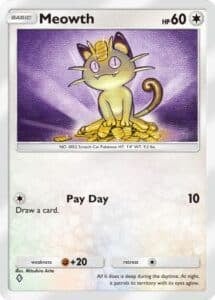
Finally there is Meowth. This definitely seems like a strange pick, and the deck doesn’t even include a Persian for Meowth to evolve into. Meowth is really only here to get your strategy set up as quickly as possible. As a Colorless Pokémon, it can use any energy for its moves, meaning that you can use its Pay Day move with a Psychic energy. While the 10 damage seems low, it allows you to deal some early game chip damage, which is where Meowth shines. Meowth is really only used for Pay Day’s secondary effect, which allows you to draw an additional card per turn. This will help you get your Mewtwo and Gardevoir cards set up much quicker, and losing Meowth early on is a very good tradeoff for getting your main strategy set up.
We should now have a pretty good sense of how the Mewtwo EX deck works. Basically you want to get Mewtwo set up to spam Psydrive to tear through the opposing team. In order for this to be the most effective, you need to have Gardevoir on the bench to use Psy Shadow to feed Mewtwo the energy it needs for Psydrive. Meowth is here as an early game option to make this setup a bit easier even with less than ideal opening hands. The rest of the cards in the deck are all pretty standard support and item cards, but all of them just serve to further feed into the primary strategy.
TLDR: Mewtwo strong, Gardevoir covers the one weakness to Mewtwo’s primary strategy. If set up correctly, this deck will dish out 150 damage every turn.
How the Pikachu EX Deck Works
Now we move on to the Lightning deck, featuring the game mascot Pikachu. It should be no surprise that this deck is powerful, so let’s break down some of the mechanics.
We’ll once again start with the core of the deck. Pikachu EX is an extremely powerful card, but it does require a strong deck behind it to function. Like Mewtwo EX, Pikachu EX is a basic card, so it doesn’t require any sort of evolution to function. 120 HP is definitely on the lower side of HP for an EX card, but the tradeoff comes how easy Pikachu is to use. For only 2 Lightning energy, Pikachu can use its move Circle Circuit. This move requires that you have at least one other Lighting Pokémon on your bench. However, it deals 30 damage for each Lightning Pokémon on your bench, capping out at 90 damage for only 2 Lighting energy. Combine this with a very cheap cost of one energy to retreat, and Pikachu EX makes for an extremely flexible and easy to use core Pokémon for this deck.
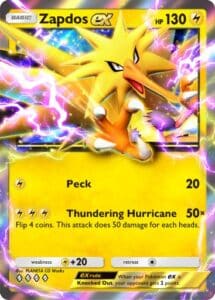
Next up is Zapdos EX. This is where the deck has a bit of flexibility. You pretty much just want any other Lightning Pokémon in this slot. While the most powerful version of this deck uses two Zapdos EX cards, this can easily be replaced by other Lightning Pokémon, where it be non-EX Zapdos or some other evolutionary line. The Helioptile and Blitzle lines are popular choices for this slot, but for the purposes of this article we’ll focus on Zapdos EX.
Zapdos EX is a pretty standard backup sweeper. It is able to dish out damage much more consistently thanks to having access to Peck for a single Lightning energy. It can deal massive damage with its Thundering Hurricane move, capping out at 200 damage for three energy. This move is high risk, and while it can pay off huge, Zapdos doesn’t need to rely on it to function. With Peck and a similarly cheap retreat cost of one energy, it can be placed on the field early on and can operate without much setup. It can then easily retreat to swap in for Pikachu EX, also providing it with the damage boost for Lightning Pokémon on the bench. You can then start investing energy back into Zapdos EX once your Pikachu EX is up and running, allowing it to clean up late game with Thundering Hurricane.
While this deck can certainly function without Zapdos EX, it slots in very nicely if you have access to even one of them.
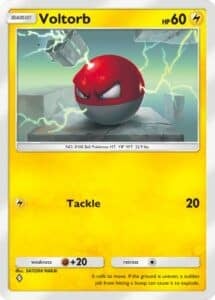
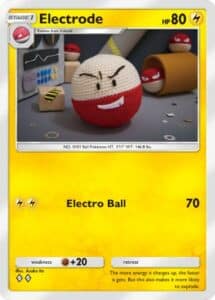
Finally on this deck is Electrode. To be honest, any of the other Lightning Pokémon in the game can be slotted in, such as replacing Voltorb and Electrode for Helioptile and Heliolisk or Blitzle and Zebstrika. That is because their primary role is to sit on the bench and power up Pikachu EX’s Circle Circuit move. However, Electrode has a few things going for it that make it my own personal pick.
For starters, Voltorb only needs to evolve once to be at full power, putting it over things like Tynamo. Additionally, 70 damage for 2 Lightning energy definitely isn’t bad in a pinch. However, the thing that puts Electrode at the top is its retreat cost, which is a whopping 0. This means that Electrode can easily pivot into another Pokémon from the active slot when it finds itself out of positing. As an added benefit, any energy you invested into Electrode won’t go to waste, allowing it to help out with cleanup in the end game. This makes it a great Pokémon to lead with, and is your best option when your opponent uses the Sabrina card to swap out your main Pokémon. This versatility alone puts Electrode above all other options in my opinion.
Again, the rest of the supporter cards are pretty standard, all helping you bolster your primary strategy. Zapdos and Electrode are great Pokémon to lead with while you set up your Pikachu EX, as well as your bench full of Lightning Pokémon. From there, they’re very easy to pivot out of into Pikachu. Consistent 90 damage will tear holes in the opposing deck.
TLDR: Pikachu EX gets a super strong move with almost no drawback. Zapdos EX and Electrode are here to support by sitting on the bench to power up Pikachu, but can also hold their own.
Now that we’ve covered how the strongest two decks work, let’s go over some general tips for countering them. These tips are pretty universal across decks, as it relies more on what you’re trying to do to stop the deck rather than your own mechanics.
Countering Mewtwo EX
As we mentioned, Mewtwo EX’s strategy is to blast through your team with Psydrive. As an EX Pokémon with 150 HP, it can tank a decent amount of hits on its own, meaning you likely won’t be able to take it out with basic Pokémon. For the most effective way to counter the deck, we need to turn our attention away from Mewtwo towards some of its supporters.
The Mewtwo deck strategy heavily leans on Gardevoir to support Mewtwo with passive Psychic energy gain. The drawback to this is that Gardevoir can’t do much on its own, but more importantly, Gardevoir needs to evolve twice before it can function. Ralts is extremely weak on its own, and while Kirlia can deal some decent damage on its own, it requires two Psychic energy, which you would almost never give to it instead of Mewtwo. If you’re able to take out your opponent’s Ralts or Kirlia before it can fully evolve, Mewtwo’s rampage will be slowed significantly. At best, it would only be able to use Psydrive every other turn, and charging up 4 energy without Gardevoir’s help will be very slow.
One of the best tools to help make this happen is the Sabrina trainer card. The Mewtwo EX deck doesn’t have very many basic Pokémon in an attempt to get Mewtwo and Ralts on the field as soon as possible. By forcing Mewtwo out and Ralts/Kirlia into the active slot, it can be much easier to target the support Pokémon that would otherwise be hiding on the bench.
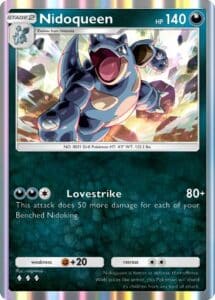
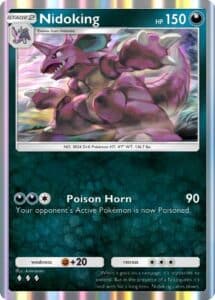


There are two options for the best decks to specifically counter the Mewtwo EX deck. First off is a Dark deck, focused around Pokémon like Nidoking, Nidoqueen, Weezing, and/or Muk. In addition to having the type advantage, utilizing the Poison effect is particularly effective against Mewtwo. As I’ve mentioned, the strategy usually involves Mewtwo sitting on the field while Gardevoir sits in the back. There are very few cases where you want to switch Mewtwo out, so Poisoning it is a great way to whittle down its health.


The other option is to build a deck around an EX Pokémon that can one-shot Mewtwo. Mewtwo sits at 150 HP, which is definitely higher than most cards but is actually pretty average for an EX card. Taking out Mewtwo will pretty understandably shut down the Psychic deck Trainer’s momentum. Two of the best options for this are Blastoise EX or Charizard EX. With the proper setup, they are capable of taking down Mewtwo in a single hit. Additionally, both of these cards have more than 150 HP, meaning they are able to survive a hit from Mewtwo’s Psydrive and can hit back for a KO. For Blastoise, I would recommend a stall deck using Blastoise EX and Frosmoth, where you spam Sleep on Mewtwo with Frosmoth while Blastoise gets set up with the whopping 5 Water energy it needs to one shot Mewtwo. For Charizard, I would recommend the Charizard EX/Moltres EX deck. Moltres can charge up Charizard’s energy extremely quickly, then you can safely bring in Charizard and take out Mewtwo.
Countering Pikachu EX
Now let’s move on to the Pikachu EX deck. To recap, Pikachu EX deals extremely strong and consistent damage for only 2 Lightning energy. In order to dish out the most damage, the deck relies on having other Lightning Pokémon sitting on the bench to power up Pikachu’s Circle Circuit move, which can dish out up to 90 damage based on how many Lightning Pokémon are on the bench.
Similarly to the Mewtwo deck, targeting Pikachu’s supporters is especially effective in shutting this team down. From my experience there are two different ways Trainers are building their Pikachu EX decks. One option is to load up your deck with basic Electric Pokémon, so that you almost never find yourself in a position where Pikachu can’t launch 90 damage Circle Circuit. The other is the more standard way of building a deck, featuring only 2 Pikachu EX and 2-4 more basic Pokémon, usually Zapdos EX and Voltorb/Electrode in the strongest iterations.

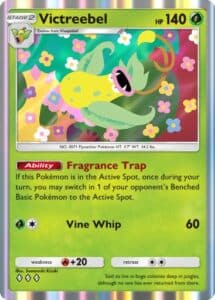
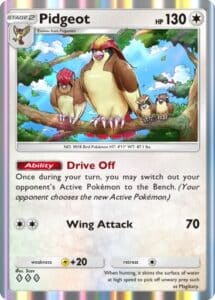
For the basic-loaded decks, they can often have a hard time positioning Pikachu EX to sweep due to the abundance of basic Pokémon in their deck. Your strategy should be to try and take out as many basic Pokémon as possible, trying to keep the opponent off balance. For the more standard deck, tools that were helpful against Mewtwo will similarly be helpful here. The Sabrina Trainer card can help you push Pikachu back to the bench and target the weaker basic Pokémon, resulting in you both taking a point as well as weakening Circle Circuit. Additionally, there are some Pokémon such as Pidgeot and Victreebel that have abilities that force your opponent to swap. Victreebel is a great option for Grass decks, and Pidgeot can be slotted onto may teams as a Colorless card.
Another thing to note about Pikachu EX is that while Circle Circuit is consistent damage, it isn’t exactly overwhelming damage like other EX cards can dish out. While consistent 90 damage is certainly scary, there are many more Pokémon that can take that hit and survive than the likes of Mewtwo’s Psydrive. Every other EX card in the game can survive the hit, as well as a fair number of non-EX Pokémon, and even some basic Pokémon like Kangaskhan. This can help you whittle down Pikachu EX, who also has an HP stat on the lower end at 120. Alternatively, there are again great options to one-shot Pikachu, again including both EX and non-EX cards.
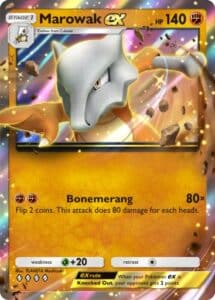

As far as decks to counter Pikachu, we again have two options. The first is a deck centered around Fighting types, who have the type advantage. Both Marowak EX and Machamp EX are able to one-shot Pikachu EX even without the type advantage. Machamp is definitely the better option here, as Marowak is extremely inconsistent, able to deal 160, 80, or 0 damage based on coin flips. However, it only requires a single evolution and 2 Fighting energy compared to Machamp’s two evolutions and three Fighting energy, so slotting both onto a deck isn’t a bad option.

The other option may come as a bit of a surprise, but I have personally had a lot of success with a Grass deck built around Venusaur EX. Again, Pikachu dishes out 90 damage consistently, which is definitely strong, but can actually be out-healed with the right setup. Venusaur’s strongest move, Giant Bloom, heals it for 30 HP every time it is used while also dealing 100 damage. This can be paired with the Potion item card for 20 HP or the Erika Trainer card for a staggering 50 HP worth of healing. While it wouldn’t be the absolute most efficient way to use your cards, you could theoretically heal off all of the damage that Pikachu can deal to you. Additionally, Venusaur has 190 HP, meaning it can usually take 2 hits from Pikachu (disregarding the Giovanni Trainer card boost).
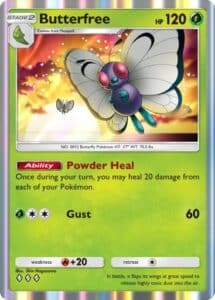
You have two options to round out the Grass deck, being Victreebel and/or Butterfree. Victreebel, as mentioned before, has an ability called Fragrance Trap that lets you switch in one of your opponent’s benched basic Pokémon, many of which cannot survive the 60 damage from Vine Whip. Alternatively, you could use Butterfree, who’s passive ability Powder Heal heals every Pokémon for 20 HP, further stacking on the healing support for Venusaur. As an added bonus, Caterpie’s move Find a Friend can help you fill your hand early on with the many evolutions needed for the deck to succeed.
Now that we’ve covered how the two meta decks work, we’ll now move on to talking about some alternative decks you can use. The TCG format has a high amount of luck involved, so pretty much any deck can win under the right circumstances. With that being said, there are definitely still certain decks that consistently perform well. I have personally tried most of the decks I’ve listed below, and if I haven’t tested it myself then I have definitely played against it regularly. For each deck I’ll cover the general strategy, as well as any other important notes. Let’s take a look!
Venusaur EX (Grass)


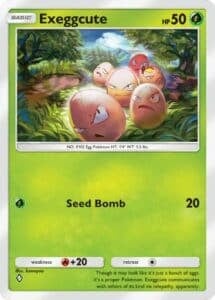

First up we have the Grass deck featuring Venusaur EX. The primary strategy for this deck is to get your Venusaur EX set up with all the energy in needs to become an unkillable tank. Between the healing from Giant Bloom as well as from the Potion and Erika cards, Venusaur can stay on the field for a good amount of time.
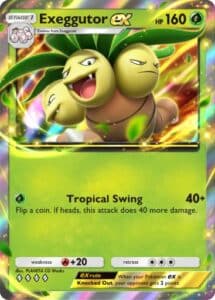
Back in one of the first sections I mentioned there was one exception to my rule of never using an EX Pokémon as a damage sponge. Exeggutor EX is that one exception. With 160 HP and only requiring one energy to attack, it plays this role extremely well, with potential to dish out 80 damage for only one energy. As long as you have Venusaur ready to counter-sweep in the back, it’s actually ok to let Exeggutor soak up hits early on and even for it to go down, as it will likely punch some solid holes in your opponent’s deck before doing so. Venusaur’s longevity thanks to all of its healing means that it won’t be knocked out easily, which would normally be the concern after losing two points.
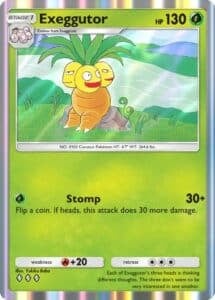
It should be noted that regular Exeggutor can play this role well as well. If you are missing Exeggutor EX in your collection or don’t like the idea of losing 2 points from your setup damage sponge, then it can easily be slotted in. While it is definitely less effective, it still plays the role very well.
TLDR: Use Exeggutor to soak up damage and soften up the opposing team as you set up Venusaur with the energy it needs. With all of the amazing healing options on the team, Venusaur will be able to survive for a surprising amount of time.
This is the only time I’m going to do this in this section, but I’ve attached my personal favorite iteration of this deck below:

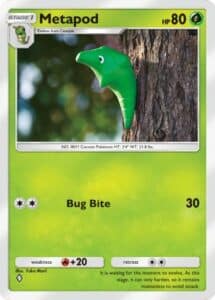
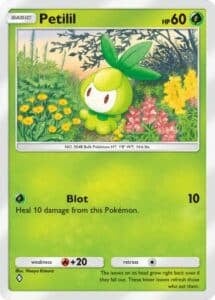
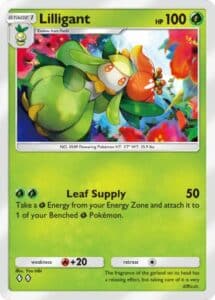
As you can see, I’ve subbed out the Exeggcute, Exeggutor, and Sabrina cards for Petilil, Lilligant, Caterpie, Metapod, and Butterfree. Lilligant is an incredible supporter for the team, able to feed Venusaur the energy it needs to do its job. Caterpie is great early game for pulling as many Grass Pokémon cards into your hand as possible, but having Butterfree sit on the bench and spam Powder Heal is what it’s really here for. Combined with all the other healing on this team, having Butterfree set up makes Venusaur pretty much invincible. As an added bonus, this team works extremely well on auto play in PVE modes. If you’re feeling adventurous, give it a shot!
Charizard EX/Moltrex EX (Fire)
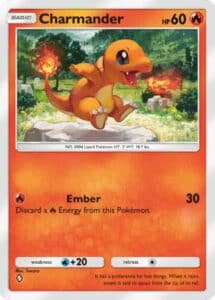
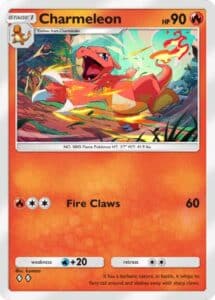



I have a personal bias towards this deck, as my first EX card was the immersive Charizard, and I played various versions of this deck for the first few weeks of the game.
With that being said, this deck is no joke. Charizard has 180 HP, making it one of the bulkiest Pokémon in the game. It has the strongest damaging move in the game currently, able to dish out 200 damage with Crimson Storm. This move is strong enough to one shot any other Pokémon in the game. However, this comes with a steep cost of discarding 2 Fire energy each time this move is used. As a backup, it also has access to Slash, dealing 60 damage for 3 energy.
This deck relies heavily on Moltres EX to help set up the rest of the team. The strongest Fire Pokémon in the game currently all have extremely powerful moves, but similarly to Charizard all have drawbacks of discarding energy in order to use them. Moltres’s Inferno Dance move is key to getting these Pokémon set up to do their jobs. It’s pretty easy to get it onto the field to set up the team, then get it off the field using an extra energy or an X Speed.
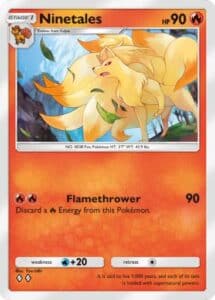
Rounding out the team is Ninetales. It is one of the few powerful Fire Pokémon that can be set up pretty easily without support from Moltres, only requiring 2 energy to deal 90 damage and having a retreat cost of 1. It’s a solid backup option if you’re not able to get Charizard set up in time.
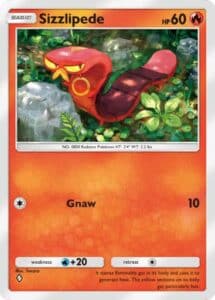
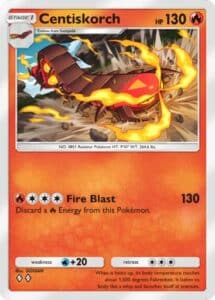

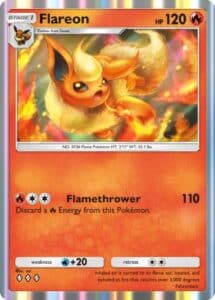
There are other options instead of Vulpix and Ninetales. Centiskorch and Flareon are solid options as well. I’ve personally been using Centiskorch, but I’ve used Flareon in the past as well. If you’re looking for a stronger and bulkier option, I would look to one of these, but Ninetales is definitely the most consistent option.
TLDR: Charizard can punch its way through pretty much anything with Crimson Storm, dealing 200 damage. However, it needs to be set up by Moltres, since Charizard needs to discard 2 energy every time it uses Crimson Storm. Ninetales is a backup option for when you aren’t able to set up Charizard.
Blastoise EX/Frosmoth (Water)

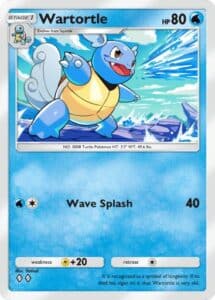


Next up we have the Blastoise EX deck. Similarly to the Charizard deck, it relies heavily on feeding Blastoise the energy it needs. Blastoise needs 3 energy to use its Hydro Bazooka move, but it gets stronger and deals an extra 60 damage if you manage to attach 2 more energy. This puts it at a whopping 160 damage, enough to one shot most Pokémon in the game, including Pikachu EX and Mewtwo EX! While it does require 5 total energy, it doesn’t need to discard energy for its moves like Charizard. It also has very good bulk with 180 HP. One of the best tools to help set up Blastoise is the Misty Trainer card. With some luck, you could be set up to sweep in a single turn! However, this is extremely luck based, so there is another Pokémon in the deck that is also suited to help Blastoise set up.
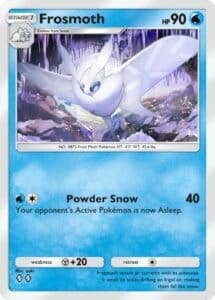
Frosmoth seems as though it’s pretty underwhelming, with a flimsy 90 HP and dealing only 40 damage for 2 energy. However, it’s the secondary effect we’re after here. Having a guaranteed way to put your target to sleep is extremely powerful. With some luck, you could prevent your target from moving completely until it’s knocked out. Additionally, the entire time your target is asleep you can build up energy on Blastoise.
TLDR: Blastoise is strong and bulky, but it needs a lot of energy to get going. Frosmoth can effectively help with this process by putting the target to sleep repeatedly. Blastoise can then switch in and clean up.
Articuno EX/Greninja (Water)



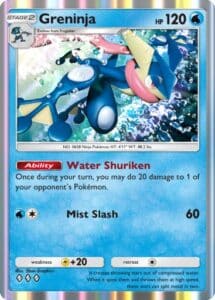
Next up is another Water deck, this time featuring Articuno EX. Articuno is an extremely consistent EX Pokémon, being able to use Ice Wing for 2 energy while building up, then spamming Blizzard for the rest of the battle. One of the biggest strengths of this team comes from Blizzard’s secondary effect, dealing 10 damage to your opponent’s benched Pokémon in addition to the 80 it does to their active Pokémon. This effect is extremely strong, and it works a bit unsettlingly well with the next Pokémon.
Greninja is a pretty decent Pokémon overall, but at first glance it doesn’t seem like anything special. However, it’s Greninja’s ability Water Shuriken that makes it powerful. It can deal 20 damage to any Pokémon it chooses, either active or on the bench. Additionally, it doesn’t require any energy to activate. Combined with the secondary effect of Articuno’s Blizzard, you can deal 30 damage passively to a Pokémon on your opponent’s bench. This can be great for sniping out weak basic Pokémon or a low HP target that has retreated.
TLDR: Articuno and Greninja combined can deal 30 damage to an opponent’s Pokémon on the bench, as well as dishing out consistent damage to the active Pokémon.
Machamp EX/Marowak EX (Fighting)
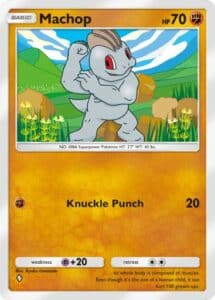
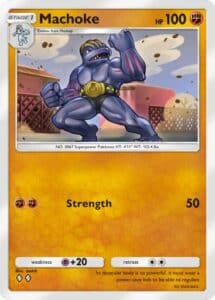

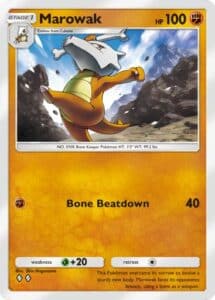
Next up is the Fighting deck featuring Machamp EX and Marowak. Machamp is another extremely consistent Pokémon. If you find yourself going second, you can slowly ramp up damage as you attach energy with Machop and Machoke. It has a no-drawbacks move that deals 120 damage, and a very good HP stat of 180. This allows it to take some of the strongest moves in the game, even including Mewtwo’s Psydrive (even though it’s super-effective!).
The other Pokémon in the deck is Marowak. It plays a very similar role to Exeggutor on the Venusaur deck, providing decent damage and bulk for an investment of a single energy.
Marowak EX is another option for the deck. It is bulkier and has the potential to deal much more damage, but there is a catch: its move Bonemerang flips two coins, dealing 80 damage for each heads. This means it could deal 80 or even 160 damage, but it could also deal 0. I have personally used this deck with two Marowak EX instead of the regular Marowak, and I have lost matches because Marowak decided not to attack. However, there are also matches I won because it one shot the opponent with a 160 damage Bonemerang. It is higher risk, but higher reward, and the choice is up to you. If you really want to spice it up, you can use one EX version and one regular one, letting you pick based on the situation.
TLDR: This deck is just extremely consistent. Marowak EX provides the only variability possible, and Machamp can tank most hits and punch its way through most targets in 1-2 hits.
Nidoqueen/Nidoking (Dark)
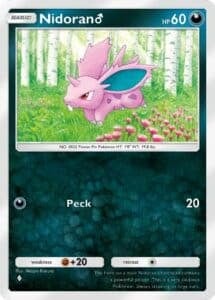
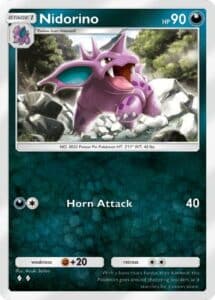
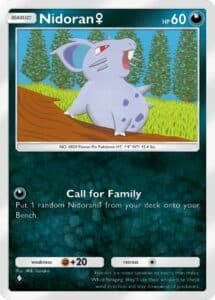
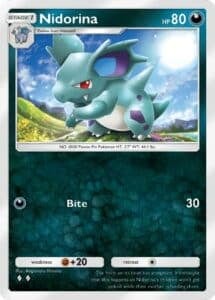
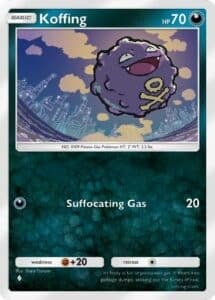

This is our first team that doesn’t feature an EX Pokémon. In fact, Dark is one of the few types that doesn’t have an EX Pokémon in the Genetic Apex Expansion. Even despite this, though, this deck is no joke!
Let’s start with Nidoking. Similarly to Machamp, it is extremely consistent, and if you time it right, you can ramp up on your damage as you evolve and stack energy. 150 HP is on par with EX Pokémon, and having a move that deals 90 damage and always poisons its target is extremely powerful! In effect, this move is almost always 100 base power thanks to the poison damage tick that happens after each player’s turn.
Next we move to Nidoqueen. Nidoqueen’s evolutionary line plays interestingly, but it actually serves to best set it up for success. Nidoran Female’s move, Call for Family, takes a Nidoran Male from your deck and automatically places it on the bench. This is thematic for this Pokémon thanks to Nidoqueen’s move Lovestrike. It is already very consistent, dealing 80 damage for 3 energy. On top of this, its secondary effect is insane. For each Nidoking on the bench, Lovestrike deals an addition 50 damage. With one Nidoking on the bench, this attack is dealing 130 damage, which is enough to one shot Mewtwo EX thanks to the type advantage. With both Nidoking sitting on the bench, this move is dealing a whopping 180 damage, enough to one shot almost every card in the game. Combine this with a solid 140 HP, and you have one of the most slept on cards in the game!
Finally is Weezing. While this card isn’t really necessary for this deck to succeed, it does make for an outstanding damage sponge. With its passive ability Gas Leak able to poison the target every turn, combined with a move that only requires one energy and a solid 110 HP, and you have a very annoying Pokémon to deal with. On top of this, you can save Weezing from being KO’d by using the Koga Trainer card to move Weezing back into your hand, allowing you to switch into Nidoking or Nidoqueen for free without even giving your opponent a point. Again, not required, but definitely a nice addition to the deck.
TLDR: There are a few options in this deck to help whittle down your target with Poison. Weezing makes for a great damage sponge to help set up Nidoking and Nidoqueen. Nidoking is able to deal great damage on its own and can poison the target, and Nidoqueen can deal massive damage as long as there is a Nidoking on the bench.
Dragonite/Weezing (Water/Lightning)



Our final deck that I’m going to cover for this article is pretty unique. I personally despise playing against this deck. If it’s able to get set up, it can deal massive damage, but a lot of the time it feels totally up to luck as far as how well it does. Nevertheless, it is powerful, so we’re going to talk about it here.
This deck is built around Dragonite, the only Dragon type evolutionary line available in Genetic Apex. There are a few things to note about Dragonite. First of all, you’ll notice that Dragonite doesn’t have any weaknesses. In future expansions there may be Fairy type cards introduced, but for now there is now way to hit Dragonite for Super Effective damage, and there aren’t many attacks that deal 160 damage without the type advantage. On top of this, Dragonite’s move Draco Meteor is extremely powerful. While it does require a pretty steep energy cost of 4, the payoff can be huge. Draco Meteor deals 4 instances of 50 damage for a combined total of 200 damage, and each of these sets of 50 damage can target any of your opponent’s Pokémon, either active or benched. The downside is that you aren’t able to select the target of this move. If the opponent only has one active Pokémon, then all 200 damage will be directed into the target. However, if there are Pokémon on the bench, then this 200 damage can be distributed in any combination. I’ve seen all 200 damage still go into a single target despite there being 4 targets, and I’ve also seen it evenly distributed to every target. While this may seem difficult to use, remember that most Pokémon in the game have 100 or less HP, meaning that they can only take 2 of the potential damage ticks from Draco Meteor. Additionally, we have to remember Dragonite is extremely difficult to take down in a single hit due to high HP and no type weakness, meaning you will likely be taking at least 2 Draco Meteor’s. Even if you get your primary strategy online, Dragonite can usually get around it and target your weaker benched Pokémon, and there aren’t many teams even of all EX Pokémon that can take 3 Draco Meteor’s.
Dragonite is also interesting because of the energy it uses. In order to attack, Dragonite requires both water and lightning energy. Dragonite’s Draco Meteor only requires one of each, as well as two more energy of any type, meaning that it’s pretty easy to get the energy required to use it. However, the nature of a deck with two types of energy means that it is very difficult to use Pokémon of either type, as they could find themselves in situations where they can’t use their moves due to lacking energy of their type.
This brings us to Weezing. In this deck, Weezing becomes the epitome of a damage sponge. Similarly to the Nidoking/Nidoqueen deck, Weezing is here to sit on the field and deal chip damage while you set up the rest of your Pokémon, Dragonite in this case. The difference here is that Weezing does not require any energy for this deck. In fact, it isn’t even able to use the Water or Lightning energy to attack. It is only here to use its ability Gas Leak, which doesn’t require any energy to use. This poison chip damage can bring targets into range of a single hit from Dragonite’s Draco Meteor, all while Weezing is soaking up damage while all energy is directed to Dragonite. If Weezing is about to be knocked out, it can similarly be recalled into your hand using the Koga Trainer card, and this time you don’t even need to worry about any wasted energy. This allows you to safely bring in Dragonite once it is set up, or even a second Koffing into Weezing if Dragonite needs more time to set up.
TLDR: Dragonite can deal massive damage to the opposing deck with Draco Meteor, able to hit any of your opponent’s active or benched Pokémon with at least 50 damage. It takes a while to get set up, so Weezing is here to deal chip damage with its ability, then be withdrawn to the deck using the Koga Trainer card.
Hopefully this article gives you some insight into some other “spice” decks that you can use as alternatives to the extremely powerful Mewtwo EX and Pikachu EX decks. While they are certainly powerful, they can be effectively countered if well prepared for, and there is some pretty insane power to be found in other decks. My personal favorites out of the listed options are the Grass deck with Venusaur EX, Lilligant, and Butterfree, the Fire deck with Charizard EX, Moltres EX, and Ninetales, and the Dark deck with Nidoking, Nidoqueen, and Weezing.
Of course, there are other decks that can successfully be used as well. A Trainer’s familiarity with their deck and how it matches up against other common decks is more important than which deck you choose. I’ve won plenty of matches where I have the disadvantage, but I’ve also lost matches where I had the advantage. The key is practice!
I think that about wraps it up for this one. Hopefully I’ll see some of you out there on the TCG Pocket battlefield!