

Pokémon GO responds to the real-world weather conditions around you. Weather changes cause certain Pokémon types to appear more frequently, reward extra Stardust when caught, and power up moves of certain types in Gym and Raid Battles. Let’s take a closer look at how weather works and what each weather boost actually does.
What Are Weather Effects in Pokémon GO?

As you search for Pokémon, the current weather conditions appear visually on the Map and during Pokémon encounters. You can also check which weather is active by tapping the weather icon in the top-right corner of the screen. This will show you which Pokémon types are currently boosted.
It will come as no shock that the in-game weather is meant to reflect the weather around you, but there is one important difference: Pokémon GO weather can change once an hour, on the hour.
The weather shown in-game may not always match what you can see outside, so don’t throw away your favourite weather app just yet.
| Weather Condition | Boosted Types | |
|---|---|---|
 |
Sunny |
|
 |
Rainy |
|
 |
Partly Cloudy |
|
 |
Cloudy |
|
 |
Windy |
|
 |
Snow |
|
 |
Fog |
|
Dual-type Pokémon can be boosted by more than one weather condition. Gible, for example, is a Dragon- and Ground-type Pokémon, so it can be boosted by both Windy and Sunny weather.
Extreme Weather Alerts
Pokémon GO may display a severe weather warning when local conditions are considered potentially dangerous. The warning is added on top of the current weather rather than acting as an eighth weather type.
Always follow local weather warnings and seek shelter when conditions are unsafe. The Pokémon will still be there when the storm passes. Probably.
Catching Weather-Boosted Pokémon

Certain Pokémon appear more frequently when the current weather matches their type. You are more likely to see Water-type Pokémon such as Squirtle and Magikarp while it is raining, for example.
Weather-boosted Pokémon have spinning pale-blue rings around them on the Map and a weather symbol above their name on the encounter screen. If a weather-boosted Pokémon was attracted by a Lure Module, the weather effect can replace the usual pink lure rings beneath it.
Weather-boosted Pokémon receive the following bonuses:
- Pokémon of the boosted types appear more frequently in the wild
- Wild Pokémon can appear from Level 6 up to Level 35 instead of the usual Level 1 to Level 30 range
- Minimum IVs of 4/4/4
- 25% additional Stardust when caught
The higher encounter level can save you a tonne of Stardust and Candy if you find something worth powering up. However, the 4/4/4 IV floor does not automatically make a weather-boosted Pokémon better for PvP. Great League and Ultra League Pokémon often prefer low Attack IVs.
Weather boost does not directly increase XP or Shiny odds.
How Much Extra Stardust Does Weather Boost Give?

Catching a weather-boosted Pokémon awards 1.25× Stardust, or 25% more than catching the same Pokémon without a weather boost.
A Pokémon that normally gives 100 Stardust will give 125 Stardust when weather boosted. The bonus also applies to Pokémon with higher base Stardust rewards and can be combined with event bonuses and a Star Piece.
Weather-Dependent Pokémon Forms
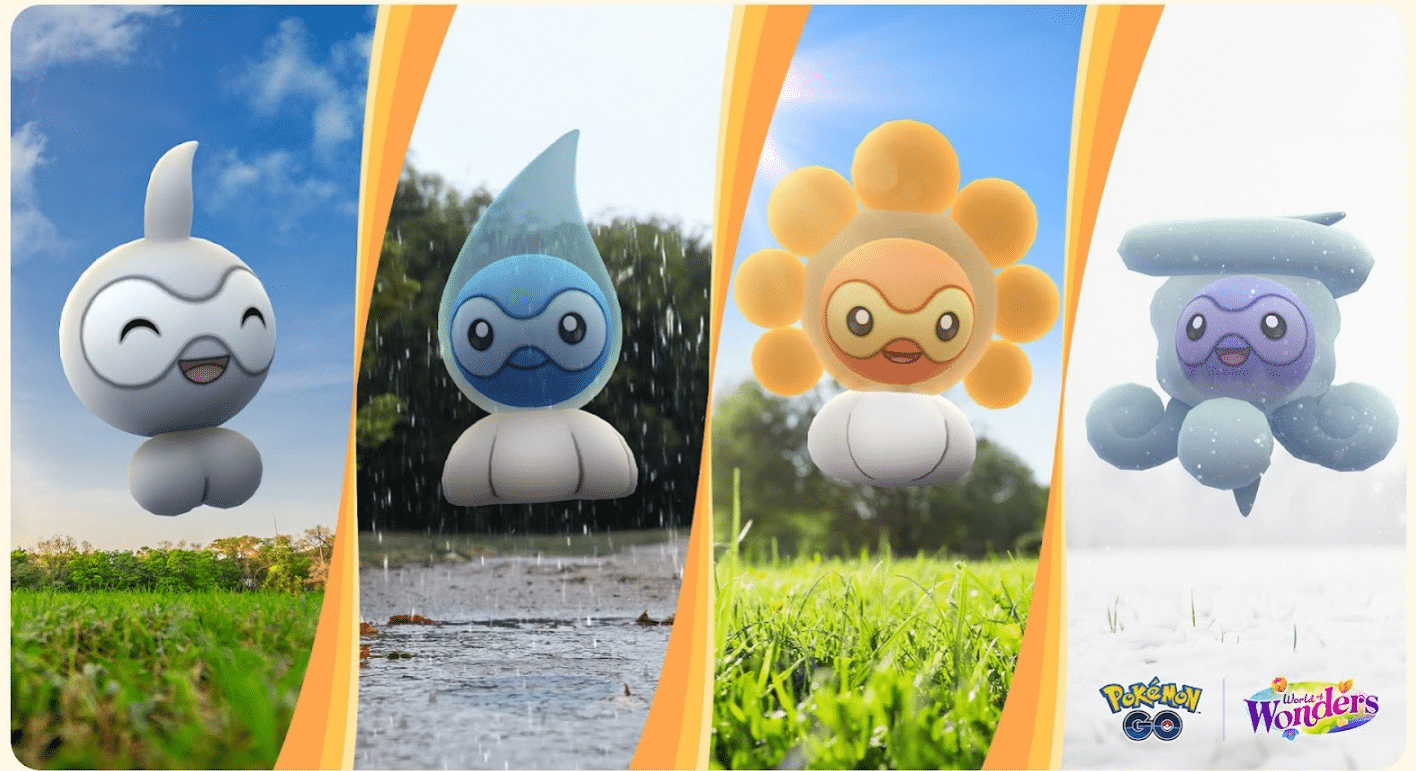
Castform and Cherrim can appear in different forms depending on the current weather. Events, research and other special encounter sources may make these forms available under different conditions.
| Pokémon | Weather |
|---|---|
 Castform
|
Partly Cloudy, Cloudy, Windy |
 Sunny Castform
|
Sunny / Sunny |
 Rainy Castform
|
Rainy |
 Snowy Castform
|
Snow, Fog |
 Overcast Cherrim
|
All weather except Sunny / Sunny |
 Sunny Cherrim
|
Sunny / Sunny |
A Castform or Cherrim form is decided when the Pokémon first appears. If the weather changes while that Pokémon is still on the Map, its form will not change.
One slightly strange detail is that Fog produces Snowy Castform, even though Fog boosts Dark- and Ghost-type Pokémon rather than Ice types.
Weather Evolution Conditions

 Sliggoo
There is currently one Pokémon evolution that can be completed using the in-game weather. Sliggoo can evolve into Goodra for 100 Goomy Candy while the weather is Rainy. If it is not raining, you can also evolve Sliggoo while within range of a PokéStop with an active Rainy Lure Module.
Weather Effects in Raids and Gym Battles

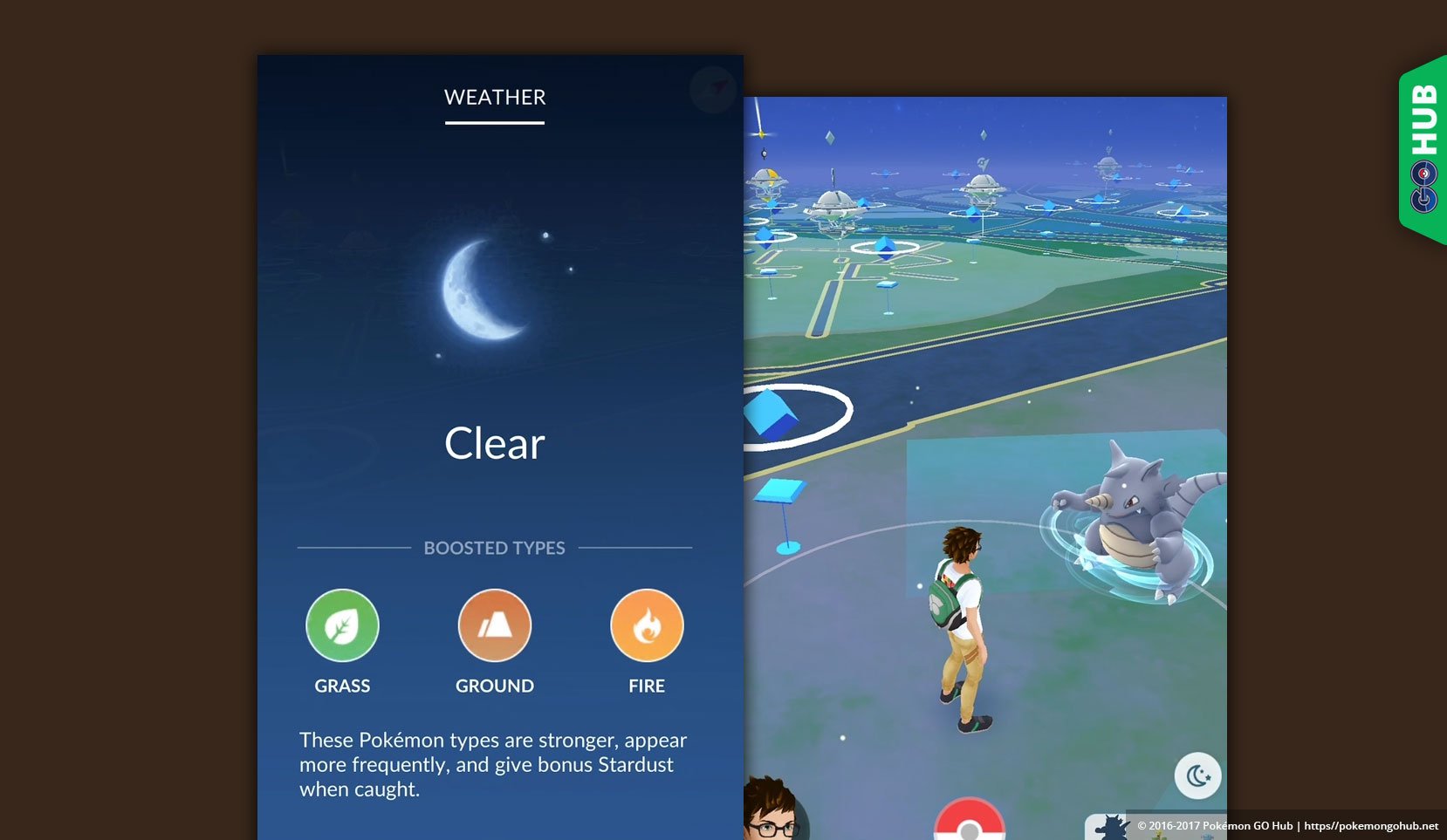
Moves matching the current weather deal 20% more damage in Gym and Raid Battles. The weather boost is based on the move’s type, not the Pokémon’s type.
For example, Sunny weather boosts Fire-type moves. Any Pokémon using a Fire-type Fast or Charged Attack will receive the damage bonus, even if the Pokémon itself is not a Fire type.
Weather affects attacks used by both your Pokémon and the Raid Boss. Ideally, you are looking for weather that boosts your team of counters without also boosting any of the attack types the Raid Boss has access to.
The weather damage bonus can also stack with the Shadow Pokémon attack bonus. A Shadow Pokémon using a weather-boosted move will receive both bonuses.
For remote raids, the weather at the Gym’s location is used. Your local weather has no effect on a raid taking place somewhere else.
Weather-Boosted Raid Boss Encounters
A Raid Boss whose type matches the weather is encountered at Level 25 after the raid. A Raid Boss without a weather boost is encountered at Level 20. This can save you a fair amount of Stardust and Candy if you plan to power it up.
The weather used for the Raid Boss encounter is determined when you first enter the raid. If the weather changes before you reach the encounter screen, the original weather conditions still apply.
Weather does not change the normal 10/10/10 IV floor for Raid Boss encounters.
Weather Effects on Shadow Pokémon

Weather does not boost move damage during Team GO Rocket battles. Rocket battles use Trainer Battle rules, which are not affected by weather.
However, the Shadow Pokémon you encounter after the battle can still be weather boosted if its type matches the current conditions.
A weather-boosted Shadow Pokémon is encountered at Level 13 instead of Level 8 and has minimum IVs of 4/4/4.
Does Weather Affect PvP?

Obviously, this leaves PvP. Weather has no effect on GO Battle League or any other Trainer Battle.
This includes battles against friends, training against the Team Leaders and Team GO Rocket battles. If you are in London and battling someone in Tokyo, the game does not need to decide whose weather should be used.
Weather Fun Facts
- The weather feature was announced on December 6, 2017, alongside the arrival of more Pokémon from the Hoenn region. It was released two days later.
- Rain, Wind, Snow and other weather conditions can add matching visual effects to the Map and Pokémon encounter screen.
- Sunny and Clear are mechanically the same weather condition. The game uses Sunny during the day and Clear at night.
- Fog produces Snowy Castform, despite Fog boosting Dark- and Ghost-type Pokémon.
- Fairy-type moves are boosted by Cloudy weather in Pokémon GO. In the Generation VIII main series games, Fairy types are instead associated with Fog.
- A weather-boosted Shadow Pokémon using a boosted move in a raid can benefit from both the Shadow attack bonus and the 20% weather bonus.
Pokémon GO Weather FAQ
How often does the weather change?
Pokémon GO weather can update once per hour, on the hour. It may remain the same if the local weather data has not changed.
Why does Pokémon GO show the wrong weather?
The game uses weather information for a wider area rather than conditions measured at your exact location. This means the weather shown in Pokémon GO may occasionally differ from what you can see outside.
Does weather boost increase Shiny odds?
No. Weather boost does not increase the chance of finding a Shiny Pokémon. It may cause more Pokémon of the boosted types to appear, giving you more chances to check them.
Does weather boost increase XP?
No. Weather-boosted catches do not award additional XP. The catch bonus applies to Stardust, encounter level and minimum IVs.
Does weather affect Research encounters?
No. Pokémon encountered through Field Research, Special Research and Timed Research do not receive weather bonuses. GO Battle League reward encounters are also unaffected.
Can a weather change alter a Pokémon’s CP and IVs?
Yes. If a wild Pokémon gains or loses its weather boost while it is still on the Map, its level, CP and IVs can change.
If you enter the encounter before the weather changes, the Pokémon will keep its original stats even if you catch it after the hour changes. Castform and Cherrim will also keep the form they had when they first appeared.