

Greetings Trainers! Ultra Unlock: Water Festival 2026 is here and with it we have a new Pokémon introduced in Pokémon GO: The Gulp Pokémon, Cramorant. Cramorant brings one of the most unique battle gimmicks to Pokémon GO PvP, a form-changing mechanic that triggers after using Surf or Dive, and punishes opponents who hit it with a Charged Attack. Understanding how and when Cramorant shifts between its Gulping and Gorging forms, and what each form does on contact, will be the key to unlock Cramorant’s full potential.
Cramorant: Stats, Profile and Typing

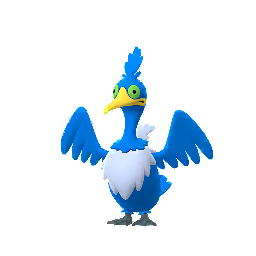 Cramorant
Water
Cramorant
Water
| Max CP | 2421 |
|---|---|
| ATK | 173 |
| DEF | 163 |
| HP | 172 |
| Weak to |   |
| Resists |       |
| Fast Attacks |
|
| Charged Attacks |
|

Cramorant is a dual Water type Pokémon and hence, has the famed double weakness to Electric attacks. It also double resists Ground attacks, along with being resistant to five other types. Irrespective of the form, Cramorant’s stats remain the same.
Cramorant’s Forms
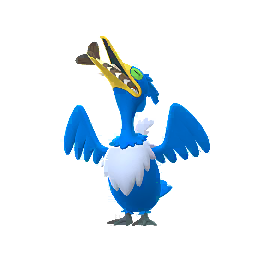
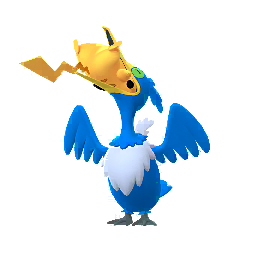
Cramorant Form Change Mechanics
Cramorant has three forms relevant to Trainer Battles:
- Normal Form – The default form at the start of battle.
- Gulping Form – A battle-only form triggered when Cramorant uses Surf or Dive while its HP is above 50%. (Arrokuda in its beak).
- Gorging Form – A battle-only form triggered when Cramorant uses Surf or Dive while its HP is below 50%. (Pikachu in its beak).
The form changes irrespective of whether your opponent uses a shield or not. Once Cramorant is in either Gulping or Gorging Form, it gains a built-in “counterattack” that triggers when it is hit by an opponent’s Charged Attack.
Gulping Form

If Cramorant is in Gulping Form and gets hit by an opponent’s Charged Attack:
- It launches the Arrokuda at the attacker.
- The opponent takes some damage to its HP.
- The opponent’s Defense is lowered by 1 stage.
This makes Gulping Form excellent for softening bulky opponents and setting up stronger follow-up damage from Cramorant or its teammates.
Gorging Form
If Cramorant is in Gorging Form and gets hit by an opponent’s Charged Attack:
- It launches the Pikachu at the attacker.
- The opponent takes some damage to its HP.
- The opponent’s Attack is lowered by 2 stages.
This makes Gorging Form a potent tool against hard-hitting attackers.
Important Interaction Notes
There are some key interactions that can happen during a battle which Trainers should remember:
- Shields do not revert Cramorant’s Form Change: If your Cramorant is already in Gulping or Gorging Form, and you protect it from your opponent’s charged attack by using a shield, then Cramorant does not revert back to its Normal Form. Also the corresponding debuffs on your opponent’s Pokémon do not occur.
- The Form effect still applies even if Cramorant faints. If Cramorant changes form and is then knocked out by a Charged Attack, the counterattack still applies, applying the damage and stat debuff to the opponent. This makes Cramorant a strong trade off option. Even if it dies, it leaves the opponent weakened for your next Pokémon.
- Switching Pokémon resets Cramorant’s form. If you switch Cramorant out of battle after it has changed form, it will return to its Normal Form when sent back in. To re-trigger Gulping or Gorging Form, it must use Surf or Dive again under the appropriate HP condition.
Parting Words
Cramorant’s Form Changing Mechanic makes it an interesting wild card pick in Pokémon GO. Gulping form can weaken bulky Pokémon while Gorging Form can cripple powerful attackers. Even if Cramorant faints, it may leave behind valuable damage and debuffs, so the right timing can turn a risky play into a winning trade. At least that’s the theory, we may have to wait for its practical use as Cramorant is currently not eligible for Competitors Cup and cannot be used in raids and gym battles.
For an in-depth PvP analysis into Cramorant, check out our guide by JRE47: A PvP Analysis on Cramorant.
Let us know Trainers! What do you think about these recent form change mechanics that have been introduced in Pokémon GO? What about Cramorant, which form intrigues you the most?
And as always, stay safe!


